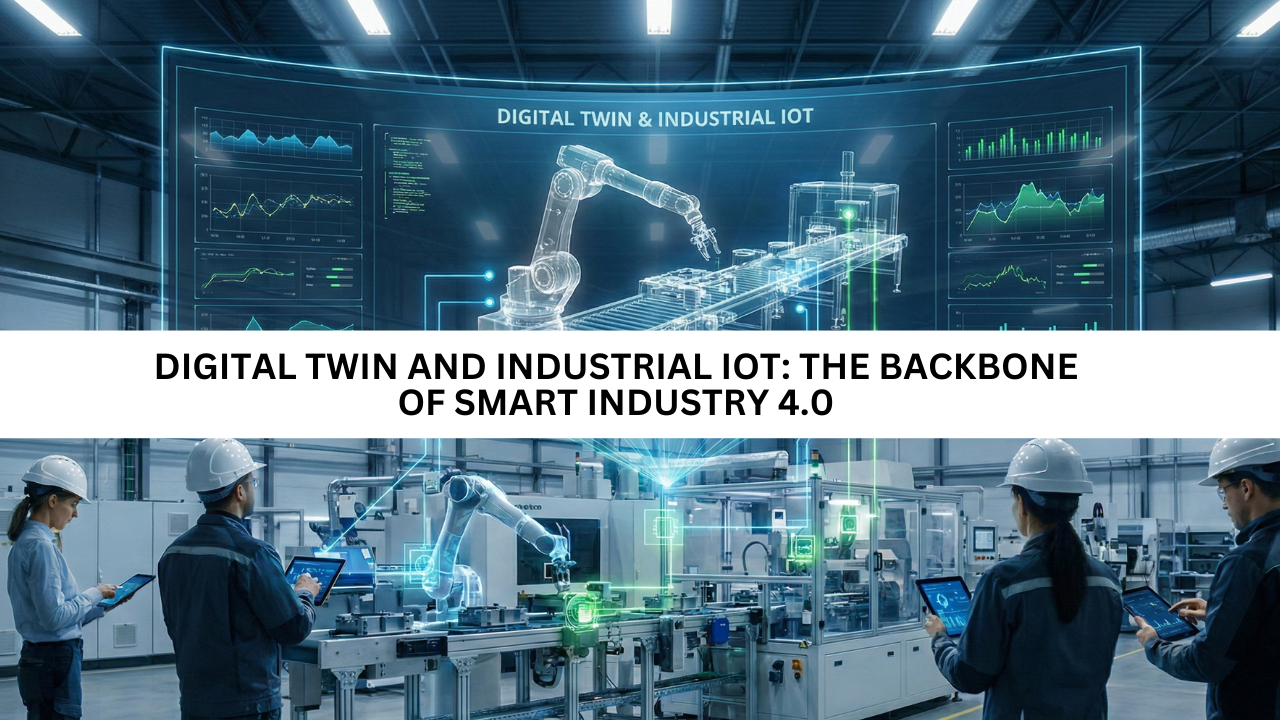
Digital Twin is swiftly becoming popular with industries around the globe as a means of achieving real-time visibility, enhanced efficiency, and minimized risks of operations through the use of Industrial IoT (IIoT). Digital twins are changing the way industrial assets are controlled, monitored, and maintained, be it smart manufacturing, utilities, and infrastructure.
This blog discusses the nature of Digital Twins, the facilitation of Digital Twins by Industrial IoT, and practical implementation of Digital Twins, as well as the importance of Digital Twins to the success of Industry 4.0.
What Is a Digital Twin?
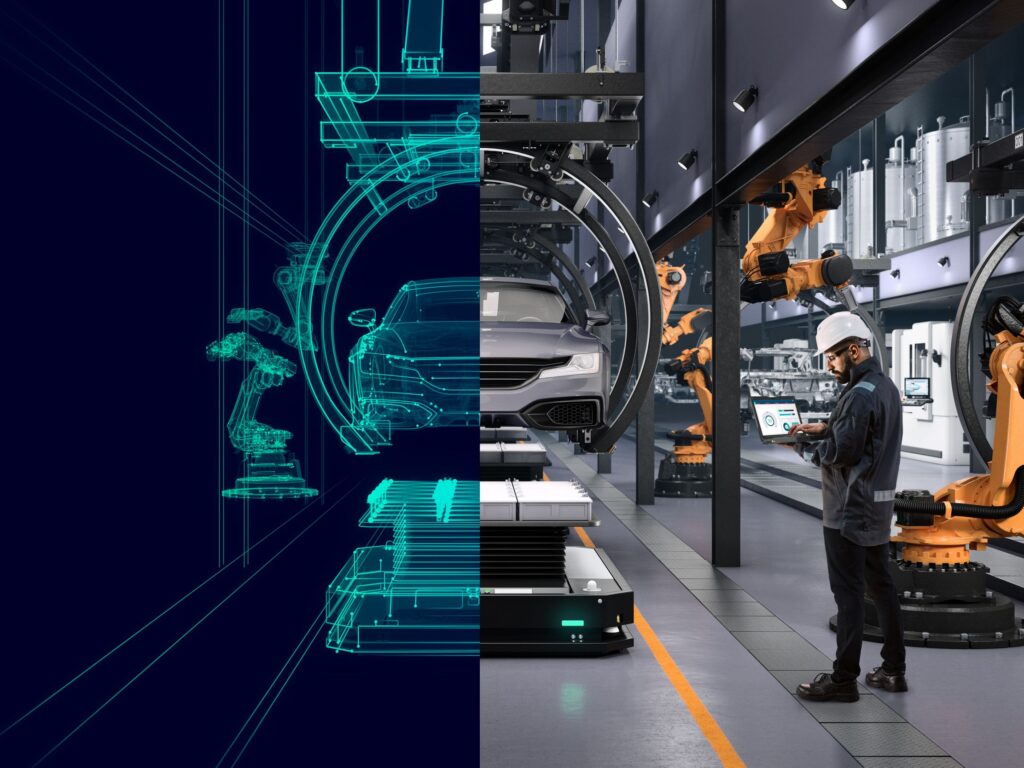
Digital Twin is a real time digital clone of a physical product, system, or process. It constantly obtains real-time data of sensors, PLCs, SCADA systems, and IoT to mirror the real state and behavior of the physical one.
Digital twins enable industries to:
- Monitor assets in real time
- Testing operational conditions.
- Warn about failure in advance.
- Enhance performance and energy consumption.
What Is Industrial IoT (IIoT)?
The concept of industrial IoT denotes the interactions between associated networks of industrial devices like sensors, machines, controllers, and software systems, which gather, transmit, and analyze data to enhance industrial processes.
IIoT is the basis of Digital Twin systems since it offers:
- Real-time sensor data
- Secure connectivity
- Cloud and edge computing
- Data analytics and dashboards
How Digital Twin and Industrial IoT Work Together
Digital Twins cannot exist without Industrial IoT. IIoT acts as the data engine, while the Digital Twin serves as the intelligence layer.
Workflow:
- Sensors collect real-time data (temperature, vibration, pressure, energy)
- IIoT platforms transmit and process the data
- Digital Twin models update instantly
- Analytics and AI generate insights
- Actions are triggered automatically or manually
This integration delivers end-to-end operational intelligence.
Critical Industrial Applications of Digital Twin and IIoT.
1. Predictive Maintenance
Digital Twins analyze equipment health using vibration, temperature, and runtime data to predict failures before breakdowns occur—reducing unplanned downtime and maintenance costs.
2. Smart Manufacturing
Manufacturers use Digital Twins to monitor production lines, optimize cycle times, reduce scrap, and simulate process improvements without interrupting operations.
3.Energy Management and Utilities.
Digital Twins are used in the power plants, water treatment plants, and factories to monitor energy usage, losses, and the efficiency of the overall process..
4. Asset Lifecycle Management
Commissioning to decommissioning Digital Twins give full history of assets – enhancing reliability and increasing equipment life.
5. Process Optimization
Industries create simulations of various operating conditions to explore the most effective process parameters without experimenting with them.
conclusion
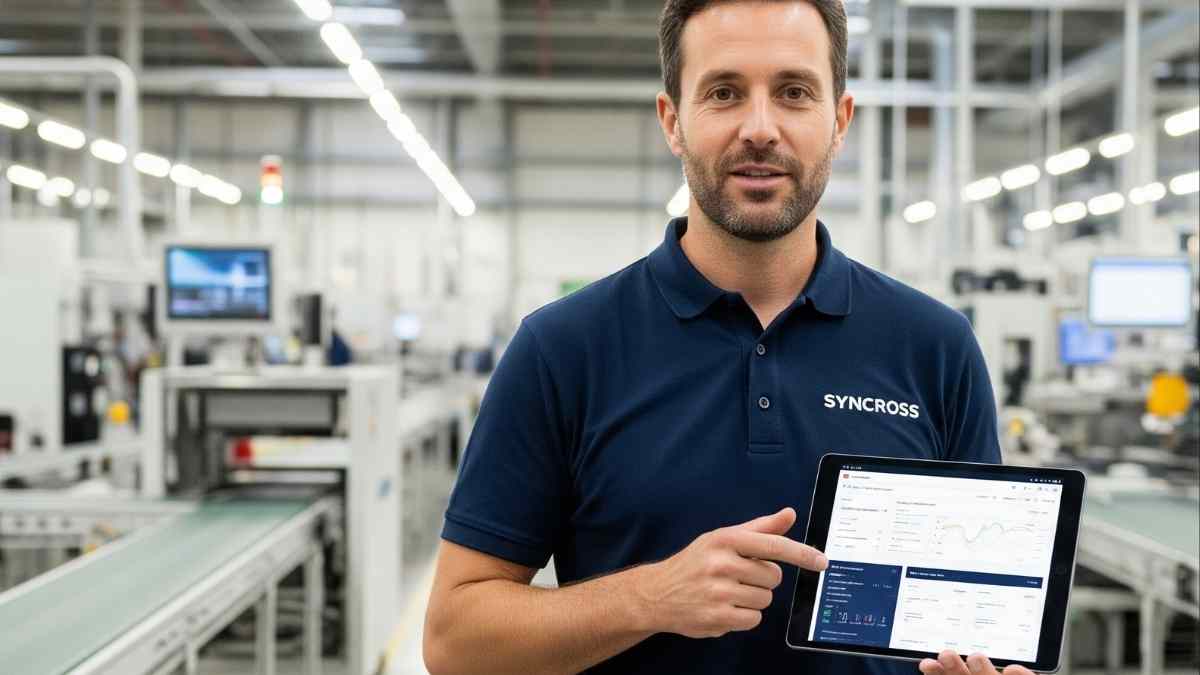
Syncross IIoT is an advanced Industrial Internet of Things (IIoT) platform that connects machines, sensors, PLCs, and SCADA systems to deliver real-time monitoring, analytics, and intelligent insights. It enables industries to track production, energy consumption, and equipment health from a single unified dashboard—helping reduce downtime, improve efficiency, and support data-driven decision-making.Digital Twin with Syncross IIoT creates a live digital replica of physical assets and processes using real-time industrial data. By combining IIoT connectivity with digital twin technology, Syncross allows industries to visualize operations, predict failures, optimize performance, and simulate improvements—making it a powerful enabler of Industry 4.0 and smart industrial transformation.