The global energy market is facing uncertainty. Rising geopolitical tensions between Iran and the United States are creating major disruptions in oil supply chains, increasing fuel prices, and putting heavy pressure on industries across the world. From manufacturing plants to logistics operations, businesses are now struggling with unstable energy costs and operational uncertainty.
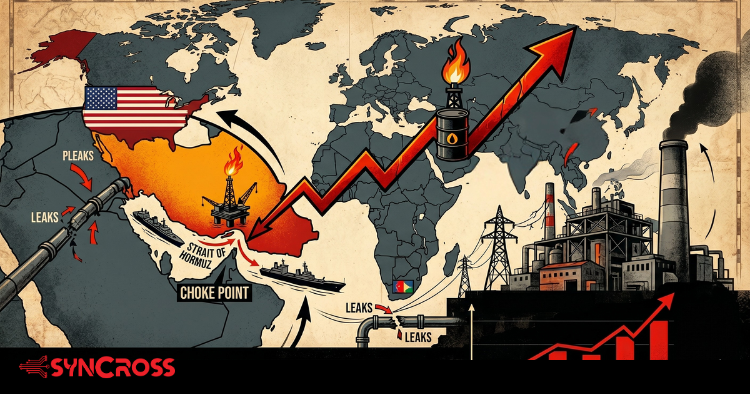
One of the biggest concerns is the strategic importance of the Strait of Hormuz — a critical route through which nearly 20% of the world’s oil supply passes every day. Any disruption in this region directly impacts global oil prices, transportation costs, electricity generation, and industrial production.Analysts warn that if tensions continue, oil prices could rise beyond $100 per barrel, creating another wave of global inflation and industrial instability
The Impact on Industries and Factories
For industries, energy is no longer just an operational cost — it has become a strategic challenge.
Factories around the world are facing:
- Rising electricity and fuel costs
- Increased production expenses
- Higher transportation and logistics costs
- Unstable utility consumption
- Difficulty in forecasting operational budgets
- Pressure to reduce carbon emissions while maintaining productivity
Energy-intensive sectors such as garments, textiles, steel, cement, pharmaceuticals, food processing, and manufacturing are especially vulnerable. Even a small increase in utility costs can significantly affect profitability.
In developing economies like Bangladesh, where industries already face challenges related to power quality, gas supply, and operational efficiency, the situation becomes even more critical.
Why Traditional Energy Management Is No Longer Enough
Many factories still rely on manual utility monitoring, paper-based reporting, and reactive maintenance approaches. This creates major blind spots in operations.
Without real-time visibility, industries often cannot identify:
- Where energy is being wasted
- Which machine consumes excessive power
- Peak demand problems
- Idle running equipment
- Compressed air leakage
- Utility abnormalities
- Inefficient production processes
As energy prices become more volatile globally, inefficient energy usage directly translates into financial loss.
How Syncross Industrial IoT Helps Industries Overcome the Energy Crisis
Syncross Industrial IoT provides real-time monitoring, analytics, automation, and AI-driven insights that allow industries to optimize every unit of energy they consume.
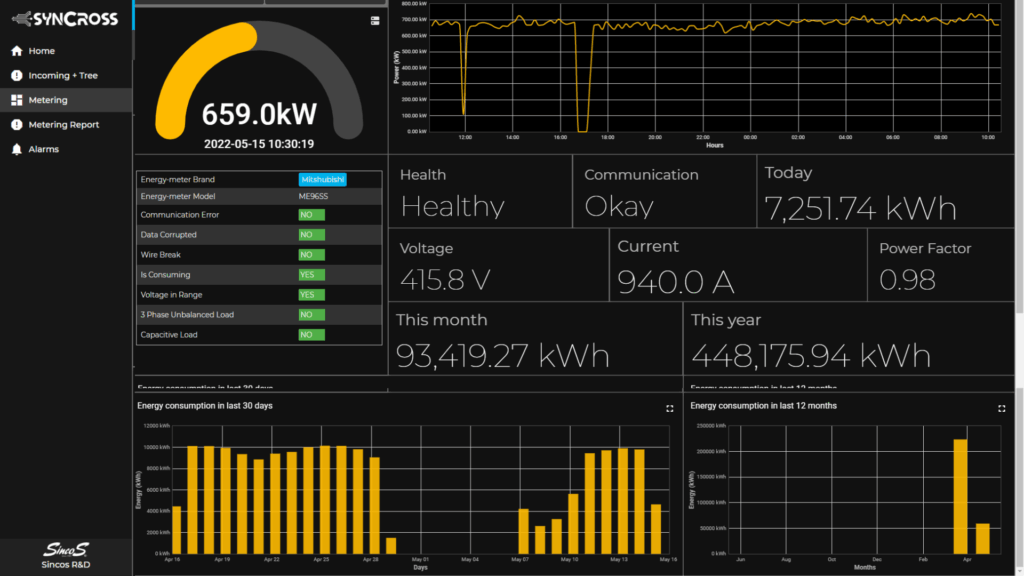
Real-Time Energy Visibility
One of the biggest advantages of Syncross is real-time visibility.
Factories can monitor:
- Electricity consumption
- Gas usage
- Water consumption
- Steam usage
- Compressed air systems
- Machine-wise energy performance
- Production vs energy consumption ratio
This enables management teams to instantly identify abnormal energy consumption and take corrective action before losses increase.
Peak Demand Control and Load Optimization
Many factories pay extremely high electricity bills due to peak demand penalties.
Syncross continuously monitors load behavior and helps industries:
- Reduce peak demand charges
- Balance electrical loads
- Avoid unnecessary equipment operation
- Schedule high-load machines efficiently
This directly reduces operational costs while improving energy stability.
AI-Driven Energy Optimization
Modern industries generate massive amounts of operational data every day. However, raw data alone has little value unless it is transformed into actionable intelligence.
Syncross uses intelligent analytics and AI-driven dashboards to:
- Detect energy wastage patterns
- Predict abnormal utility behavior
- Identify inefficient production lines
- Optimize machine operation timing
- Support data-driven decision making
This allows industries to improve both productivity and sustainability simultaneously.
Utility Monitoring Beyond Electricity
In many industries, hidden losses occur through utilities such as compressed air, water, and steam systems.
Syncross enables centralized utility monitoring for:
- Air compressors
- Boilers
- Pumps
- Chillers
- HVAC systems
- Water treatment systems
By identifying leakage, overconsumption, or inefficient operation, industries can significantly reduce utility costs.
Predictive Maintenance Reduces Energy Waste
Faulty or unhealthy machines often consume more power than normal equipment.
With predictive maintenance capabilities, Syncross can:
- Detect abnormal machine behavior
- Monitor vibration and temperature
- Predict equipment failure
- Prevent unplanned downtime
This improves equipment efficiency while reducing unnecessary energy consumption.
The Future of Smart Energy Management
The global energy crisis is a reminder that industries can no longer depend solely on conventional operational methods. Geopolitical instability, rising fuel costs, and energy uncertainty are likely to continue affecting global markets for years to come.
Factories that invest in digital transformation, Industrial IoT, and smart energy management today will be far more resilient in the future.
With solutions like Syncross, industries can move from reactive energy management to intelligent, data-driven optimization — ensuring better efficiency, lower operational costs, improved sustainability, and long-term stability even during global energy disruptions.